Beginning at the Classical Atelier
Before starting at the Classical Atelier, I had never heard the term “Classical realism.” I knew the Classical Atelier was designed to teach realist drawing and painting skills, but it wasn’t until halfway through my first year that I realized that “Classical realism” is one genre among several within realism, and that the “Classical Atelier” is a specific, well-defined, traditional approach to learning the skills and aesthetics of this genre.
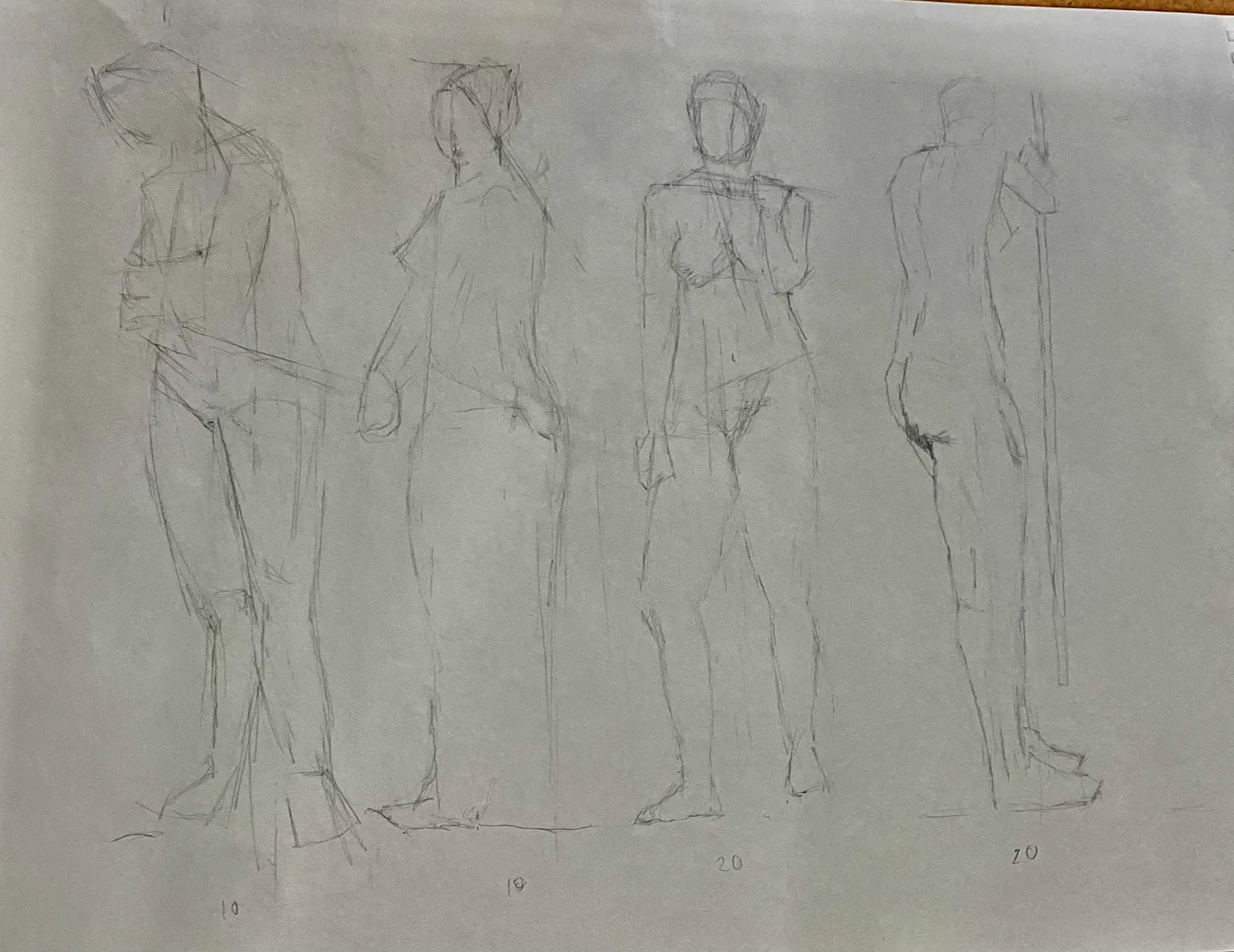
10-20 minute figure drawings in the first weeks of the atelier
I have always made art, and for me, making art has always been about feeling free, and for a long time I never thought about learning skills or technique. When you want to learn skills, you lose some freedom, because things have to be done in a certain way. However, at a certain point, I started to feel that my lack of skills was actually decreasing my sense of freedom in my artwork. There were things I wanted to do, which I simply could not. Around 2017 I started making an effort to learn skills from books, but my progress was incredibly slow. I was also working full time and only spent maybe 5-10 hrs/week making art. It felt like I wasn’t making progress at all, although now when I look at the difference between my 2016 paintings and my 2020 paintings, it’s huge.
Nonetheless, my progress was too slow, and I wanted to take the plunge to really try “the art thing.” It took a lot of courage for me to do it, because our culture is so discouraging for artists. From the moment you show an interest in art, you receive the message that it’s ok to have art as a hobby, but you’ll never make it as a professional; it’s immature, delusional even, to pursue it seriously, and you should get a real job. I internalized the message that it’s indulgent and even shameful to want to be a professional artist, and I pursued other career paths until age 35 when I left my job to start at the classical atelier.
I knew that receiving instruction in realist technique, paired with ~7 hours a day of practice, would lead to big improvements and increased freedom to execute my artistic vision.
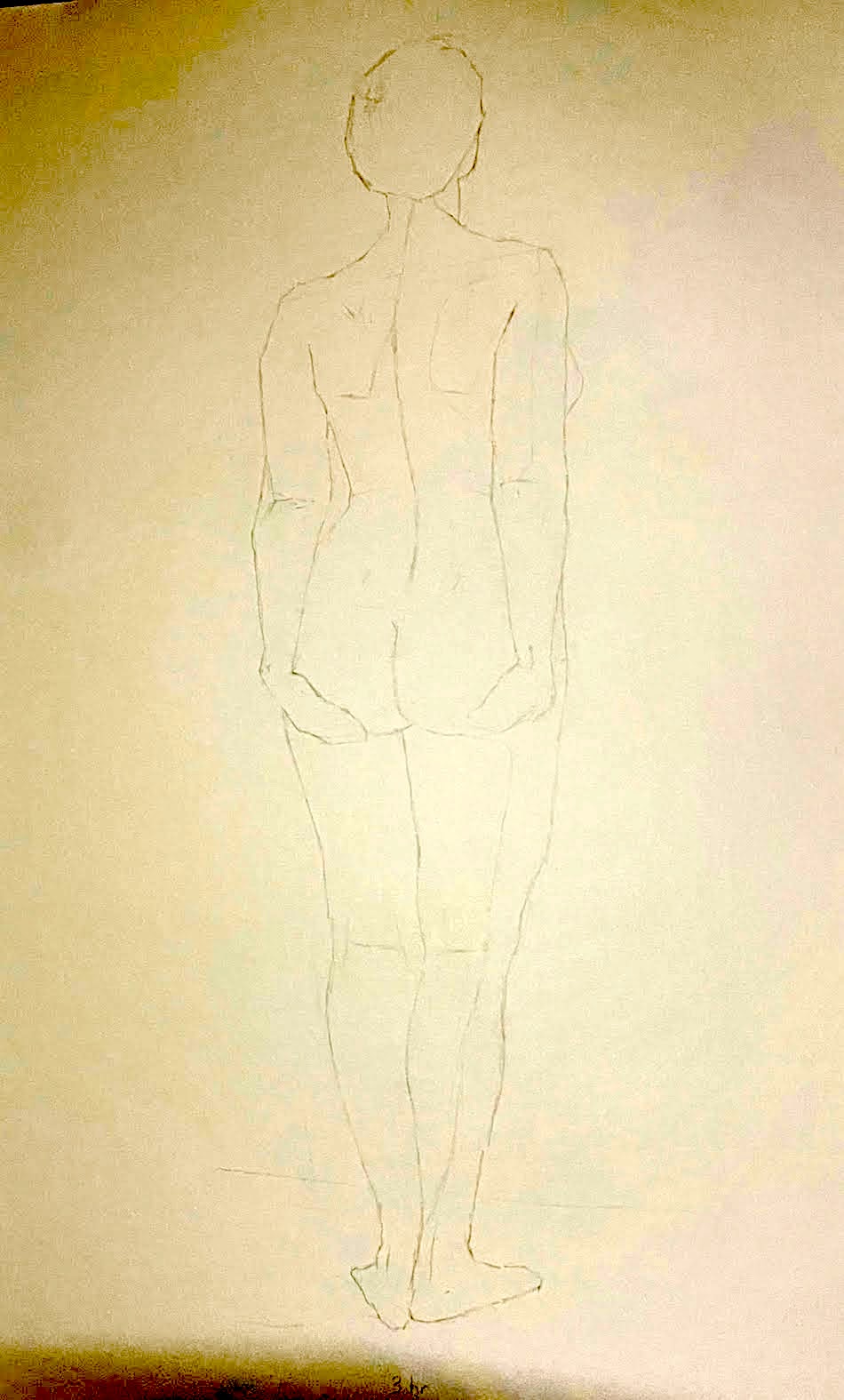
One-hour figure drawing
I knew that the program was structured around drawing from life, with a primary focus on the figure, but I thought of this focus only as a convenient medium for teaching the skills of drawing from observation. It’s true that the figure is a medium for teaching these skills, but I have come to understand that there is also a sought-after result or aesthetic within the contemporary classical figure drawing tradition (see figure drawings by e.g. Jacob Collins, Anthony Ryder, Todd Casey). Before beginning in this program, I didn’t do or look at a lot of figure drawing and had never thought about the fact that even within realism, there are conventions and qualities which are considered desirable within different traditions.
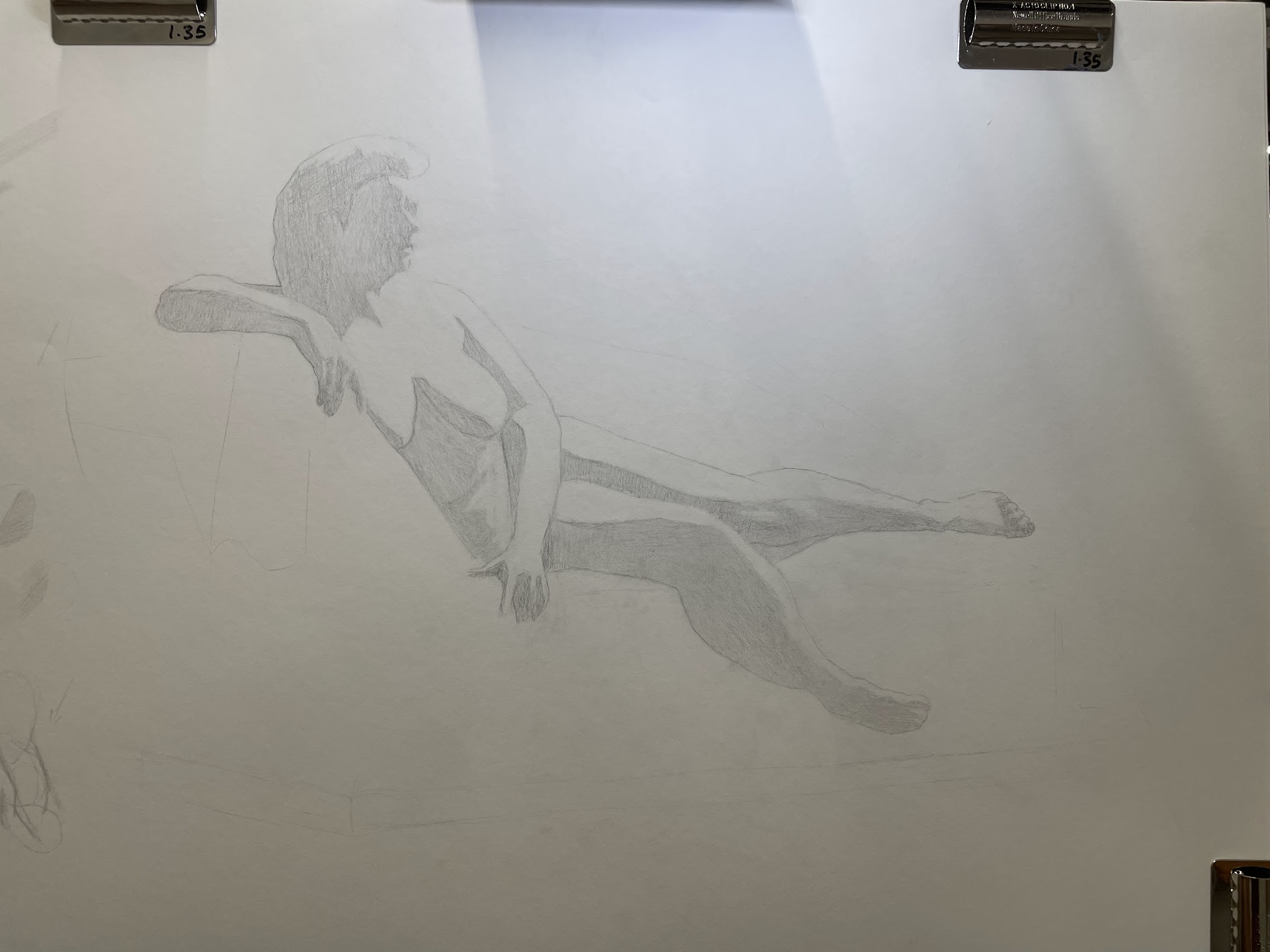
Moving from linear drawing to two-tone drawings around Week 7
Through reading, feedback from my instructors, and looking at figure drawings from both historical and contemporary classical realist artists, I have started to understand the goals and aesthetics of the classical figure drawing. I have also better understood classical realism overall.
Classical realism is an art movement based on observation, accurate representation, harmony/balance, and dramatic lighting (chiaroscuro).
(this definition is a summary from the following sources):
Classical Realism in Art - keboto.org
Artists by art movement: Classical Realism - WikiArt.org
https://www.oilpaintersofamerica.com/2013/05/classical-classic-realism-part-1/
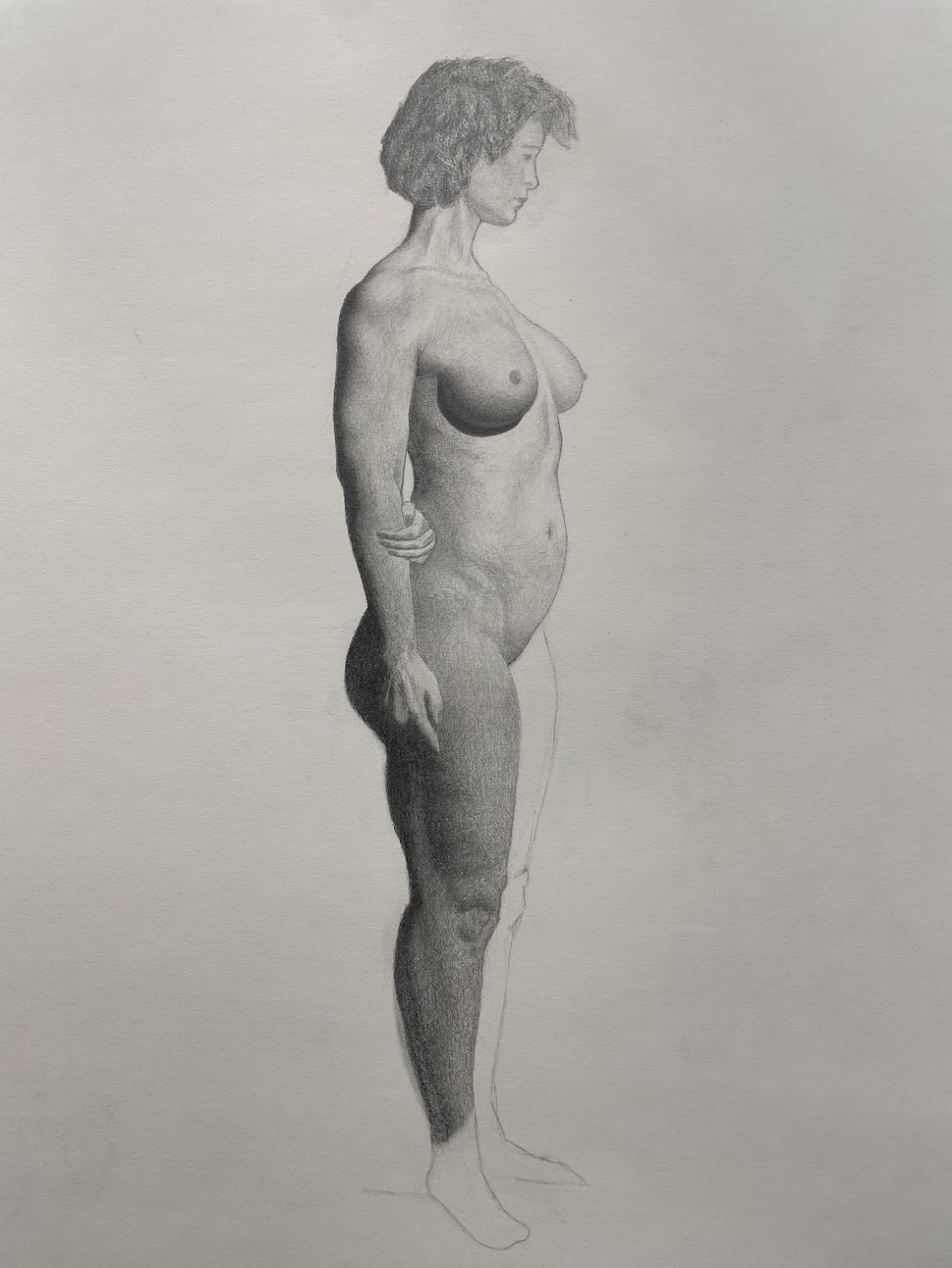
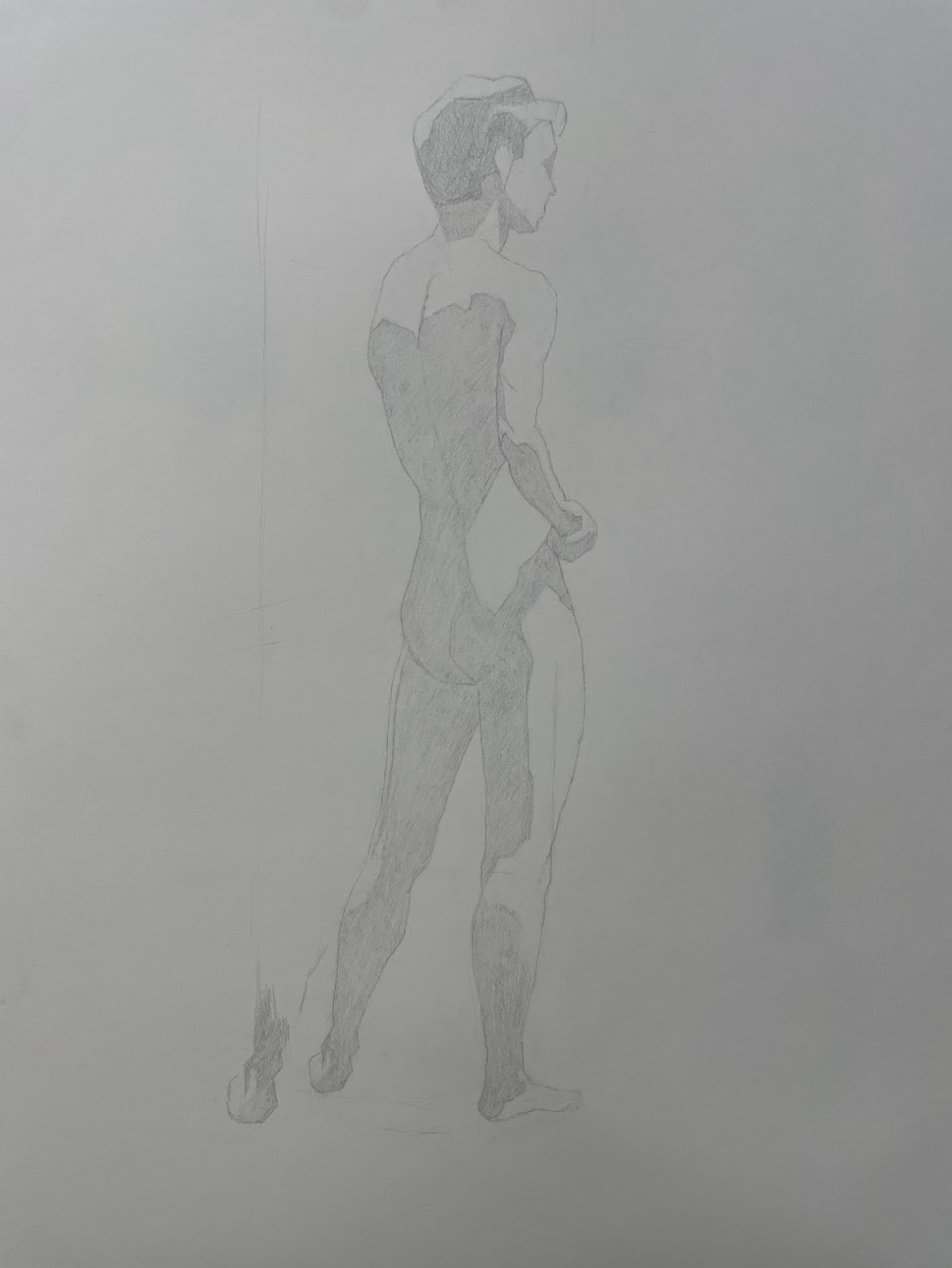
Moving from two-tone drawing to rendering (full range of light and dark) in Week 11